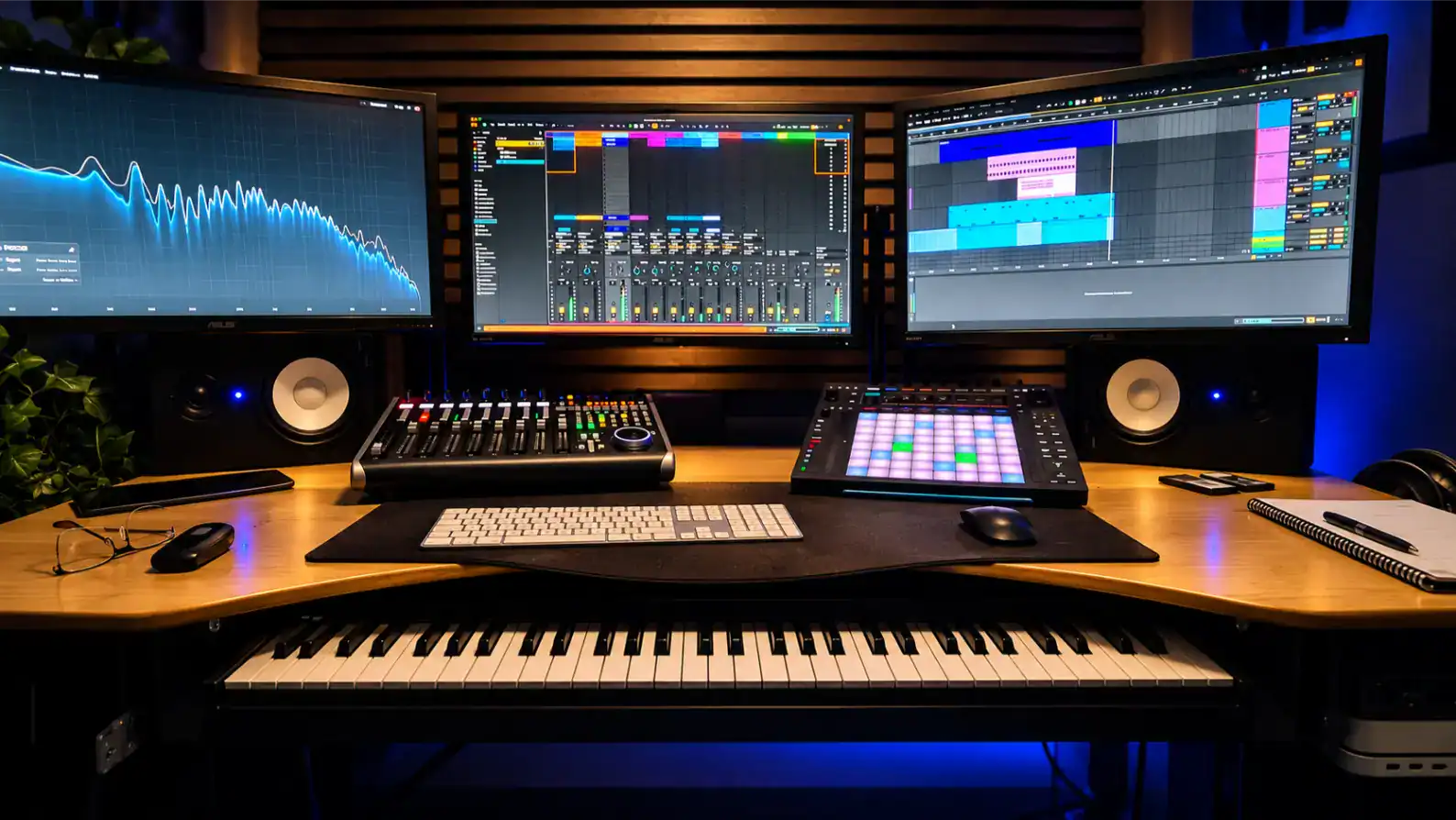
Modern workflow tools or just more AI-assisted audio processing?
Orra Audio is one of those newer plugin developers clearly targeting the modern producer workflow rather than chasing endless vintage hardware emulations.
Their plugins immediately give off a different vibe:
- Clean interfaces
- Fast workflow
- Intelligent processing
- Minimal visual clutter
And honestly, that is refreshing.
Because somewhere along the way, a lot of audio plugins started looking like aircraft cockpits designed by people who have never actually finished a track.
Orra Audio seems to be going in the opposite direction:
Less complexity. Faster decisions.
At least on the surface.
I recently picked up both Tone Zone and Orra EQ, but I have not had enough studio time with them yet for a proper deep-dive review. So this article is more of a first look and some early thoughts before they properly enter the daily workflow.
And in a world currently drowning in “AI-powered audio tools”, these plugins raise a pretty important question:
Are they actually helping creativity and workflow — or are they slowly removing the producer from the process?
Tone Zone – Fast Results Without Endless Tweaking?
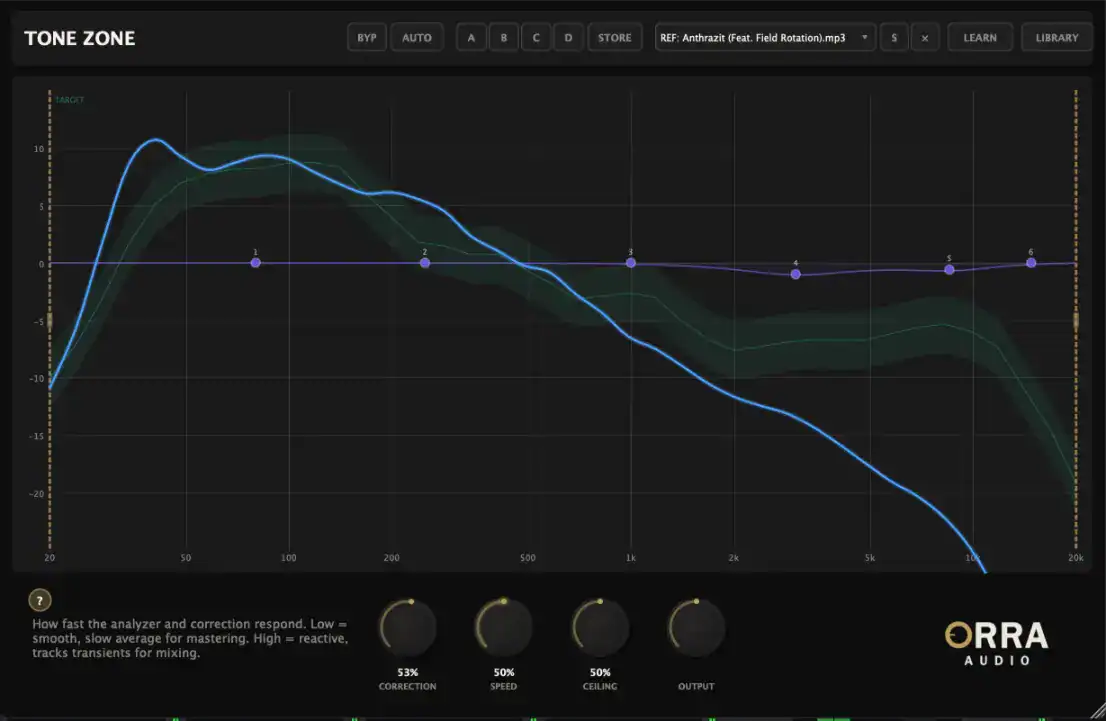
Tone Zone immediately stands out because of how simple it looks.
Very simple.
The interface suggests a plugin designed around speed rather than endless tweaking sessions. This does not appear to be another deep technical channel strip where you spend 40 minutes adjusting tiny settings while forgetting the actual music.
Instead, Tone Zone seems focused on:
- Fast tonal shaping
- Intelligent processing
- Quick enhancement
- Helping sounds sit better in a mix
That can be a very good thing.
Especially during the creative phase where momentum matters far more than technical perfection.
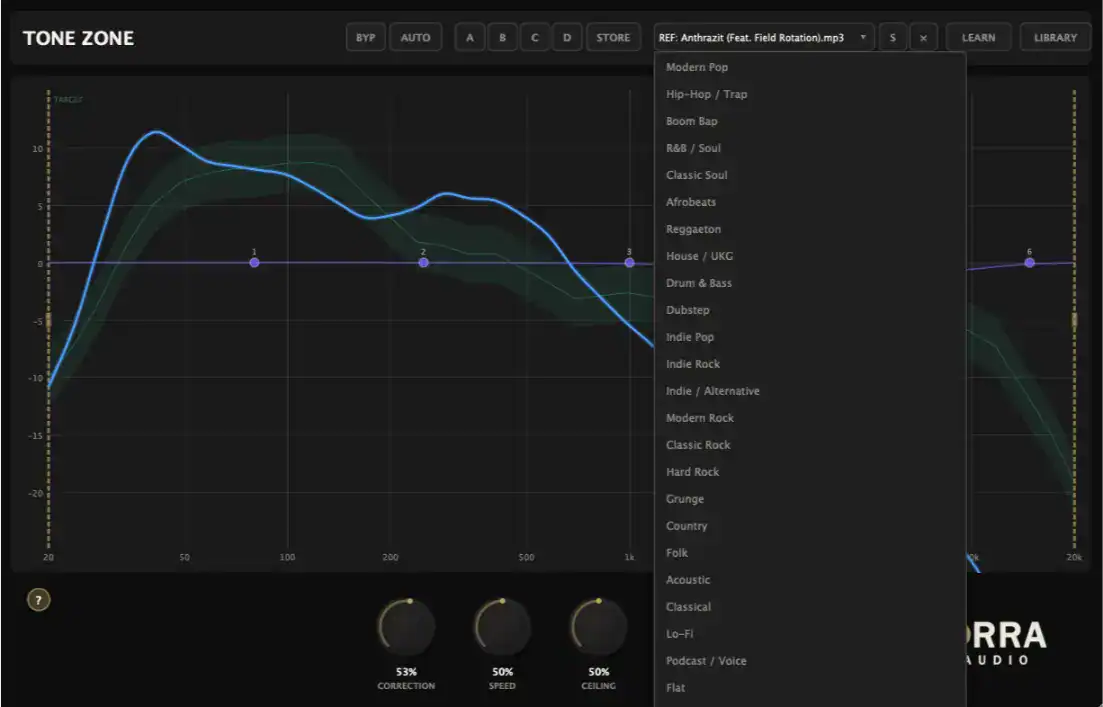
A lot of producers today get stuck endlessly polishing unfinished ideas instead of actually finishing tracks. If a plugin helps remove friction and gets you moving faster, then it already has value.
But there is also the other side of the coin.
Because many intelligent processing tools slowly push everything towards the same polished, overly-corrected sound.
And electronic music absolutely does not need more sameness.

Sometimes the rough edges, imperfections and slightly broken elements are exactly what make a track interesting.
So the real test for Tone Zone will not simply be:
“Does it sound better?”
Most modern plugins can make things sound “better”.
The more important questions are:
- Does it preserve character?
- Does it still sound like your mix?
- Does it improve workflow without taking control away?
That balance matters.
If Tone Zone behaves more like an assistant rather than a full autopilot system, then it could actually become a genuinely useful workflow tool.

Orra EQ – More Than Just Another Smart EQ
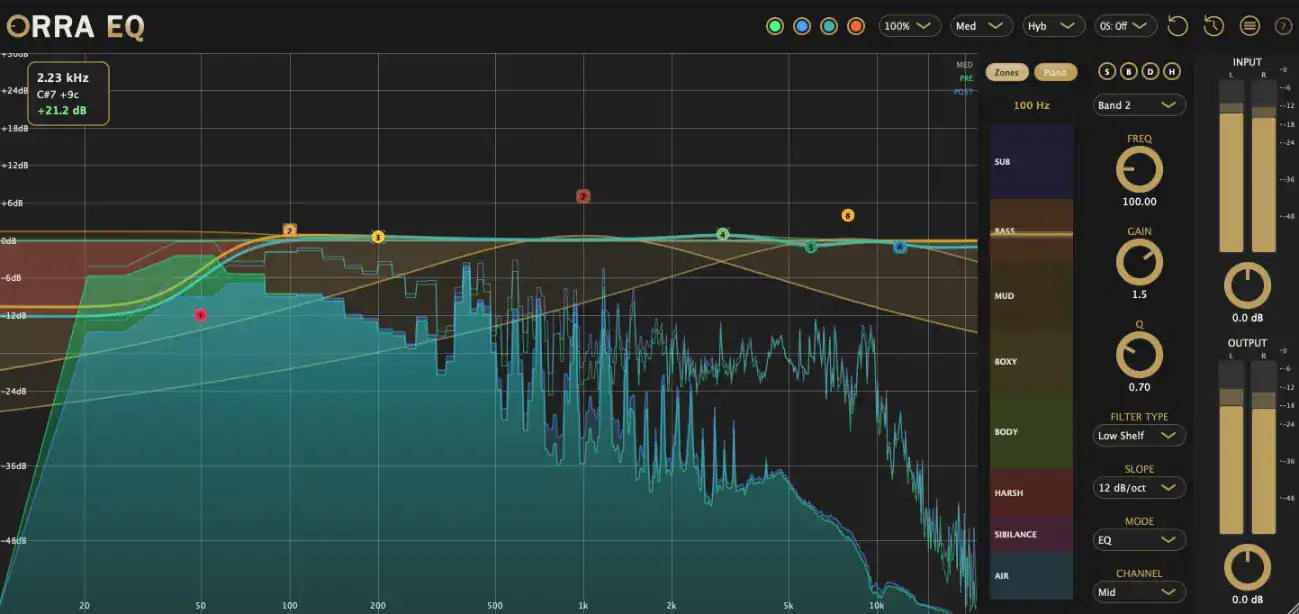
At first glance, Orra EQ looks fairly straightforward:
- Parametric EQ
- Modern visual interface
- Intelligent processing
- Clean layout
But after looking deeper into the current v1.2.1 release, it becomes clear that there is far more happening under the hood than expected.
The latest version includes:
- 16 EQ bands
- Mid/Side processing
- Per-band sidechain
- Oversampling
- Piano View
- Zones
- Dynamic saturation
- 17 saturation algorithms
Suddenly this feels much less like “just another EQ”.
And honestly, that is probably the smarter direction in 2026.
The market is already flooded with ultra-clean surgical EQs:
- FabFilter Pro-Q 4
- Kirchhoff-EQ
- TDR Nova
Most producers already own at least one excellent transparent EQ.
So instead of trying to compete directly with those, Orra EQ seems more focused on:
- Tone shaping
- Harmonic coloration
- Dynamic movement
- Creative workflow
That immediately makes it more interesting.
Saturation Seems To Be The Real Focus
One of the more unusual things about Orra EQ is how heavily saturation is integrated into the overall design.
17 saturation modes is not exactly subtle.
And from what Orra Audio describes, the saturation is not simply slapped onto the output stage as an afterthought. The harmonic processing appears tied directly into the EQ workflow itself.
That could make this plugin especially interesting for:
- Electronic music
- Synth-heavy productions
- Drum processing
- Atmospheres
- Sound design
Because sometimes the goal is not fixing frequencies.
Sometimes the goal is making sounds feel alive.
That is where plugins become creative tools rather than technical correction devices.
And honestly, that is often where the best plugins live.
The Modern “Smart Plugin” Problem
This is where things get both interesting and slightly concerning.
The entire plugin industry currently seems obsessed with:
- AI mixing
- Auto mastering
- Intelligent EQ
- Smart balancing
- Automated decision-making
Some of it is genuinely useful.
Some of it feels like software trying to replace the creative process entirely.
And there is a danger in that.
Because the more music production becomes automated, the more everything starts drifting towards the same safe, polished and predictable sound.
That is why the overall interaction design of Orra EQ currently gives me more confidence than many other “smart” plugins.
It still appears hands-on.
It still looks like a tool you actively interact with rather than a system that simply takes over and says:
“Trust me bro, I fixed your mix.”
Most experienced producers are not looking for software that makes creative decisions for them.
They want:
- Faster workflow
- Better visual feedback
- Less technical friction
- Faster routes from idea to execution
Not autopilot music production.
Where These Plugins Could Actually Fit
Looking at my own workflow, I can immediately see both Tone Zone and Orra EQ making the most sense during:
- Arrangement
- Sound shaping
- Idea generation
- Early mix balancing
Rather than detailed final-stage mixing or mastering.
That is not criticism.
In fact, that may actually be their biggest strength.
Inside Ableton Live 12 for example, speed matters. Momentum matters. Creativity matters.
Stopping every five minutes to perform hyper-clinical EQ surgery often kills the flow entirely.
That is where plugins like these could become genuinely useful:
- Tone Zone for quickly shaping the overall vibe
- Orra EQ for cleanup, enhancement and movement
- Export stems later
- Handle detailed precision work elsewhere if needed
Possibly inside Reaper or another more mix-focused environment.
That feels like the sweet spot for these tools.
Not necessarily “final answer” plugins.
But very possibly workflow accelerators.
Early Thoughts Before Proper Testing
So far, I like the direction Orra Audio is taking.
The interfaces are clean.
The workflow seems focused.
And thankfully, the plugins do not immediately scream:
“AI GENERATED AUDIO REVOLUTION!!!”
Which is honestly refreshing at this point.
Underneath the simplified UI there actually seems to be:
- Some fairly deep processing
- Creative tone shaping
- Dynamic behavior
- Harmonic enhancement
- Stereo manipulation
The question now is whether all of this translates into:
- Better sounding mixes
- Faster workflow
- More finished music
Or whether it simply becomes another plugin loaded with clever features that eventually gets forgotten in the plugin folder.
That part still needs real-world testing.
What I’ll Be Testing Further
Once I get more proper studio time with both plugins, these are the areas I really want to focus on:
- How reliable are the intelligent processing suggestions?
- Do the plugins preserve character?
- How do they behave on drums, pads, synths and atmospheres?
- How transparent is the processing?
- Does the saturation stay musical?
- CPU usage
- Long-term workflow usefulness
- Do they genuinely help finish tracks faster?
Because ultimately, that is the only thing that matters.
A plugin does not need to be revolutionary.
It just needs to help you make better music with less friction.
Similar Plugins Worth Comparing
If you are looking at Orra Audio’s approach, these plugins are probably the closest comparisons right now:
- sonible smart:EQ 4
- iZotope Neutron 5
- Gullfoss
- TEOTE
Each of them approaches intelligent processing differently, so it will be interesting to see where Orra Audio positions itself long term.